
“When I was a little girl, I lived with my grandmother who was the highest baylan during her time. She was powerful and could dance on water.”
– Baylan Undin Potenciano
Babaylan Sing Back, Grace Nono 2021
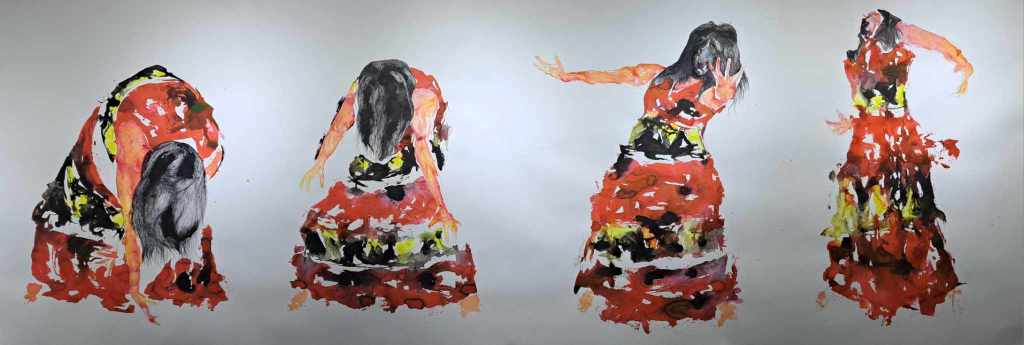
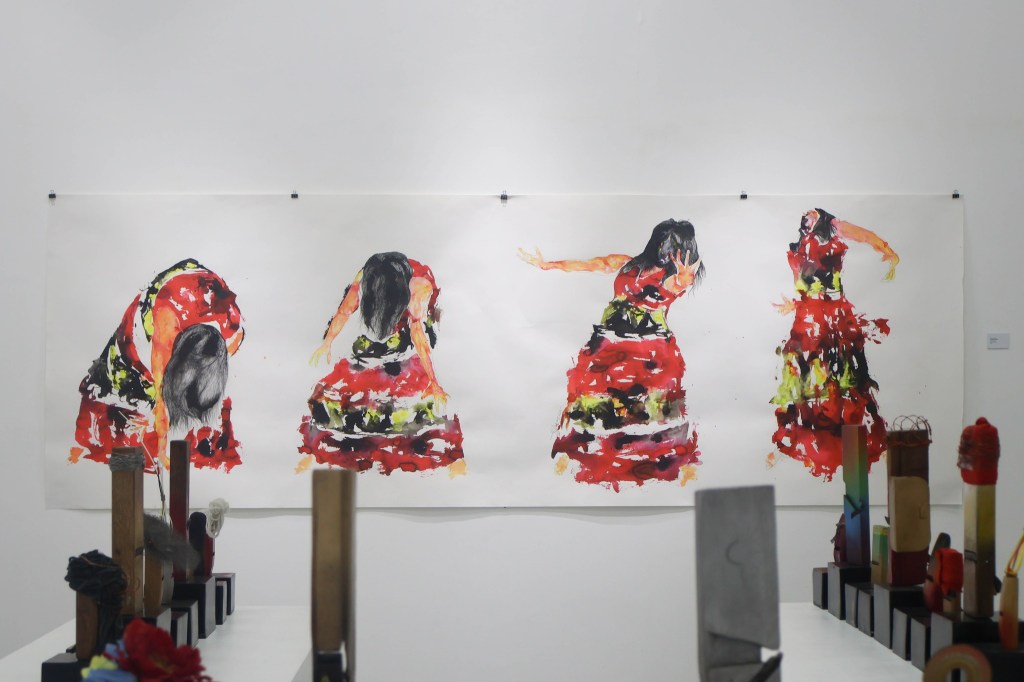
TRANSITIONS
Ink on paper 2024
48 x 144 in
The Philippines had been under colonial rule for close to 400 years.
At present, Philippine history starts with Ferdinand Magellan’s landing in the Visayas. Filipinos have been reading its history in the eyes of its colonizers and this practice is institutionalized in the current educational system.
In 1964, Anthropologist Robert Fox discovered the remains of who is known as the Tabon Man in Palawan. Studies revealed that the Tabon Man is evidence of the early existence of the modern man in the Philippines. They existed 37 000 to 47 000 years ago. This means the group of islands now known as the Philippines has an existing 40,000-year culture not talked about in present history books.
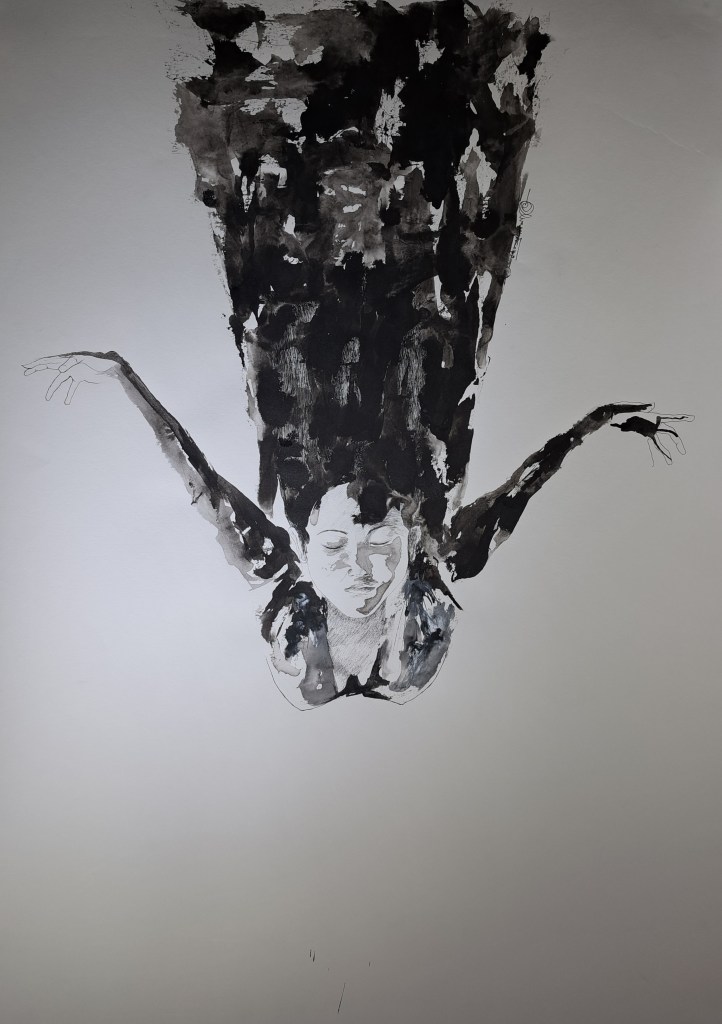
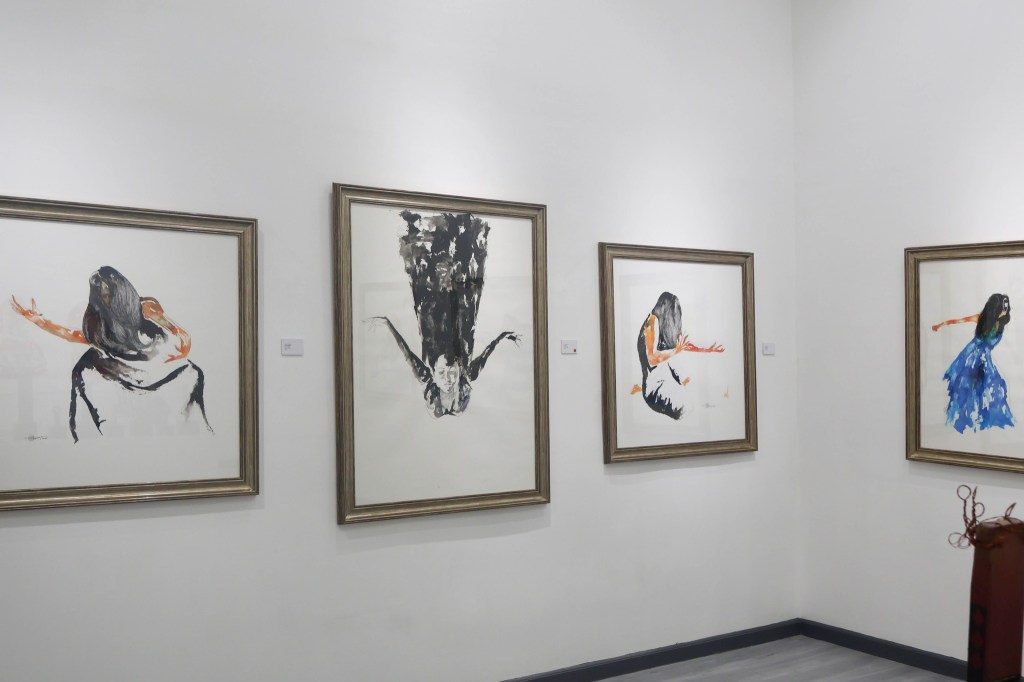
FLIGHT
Ink on paper 2023
48 x 36 in
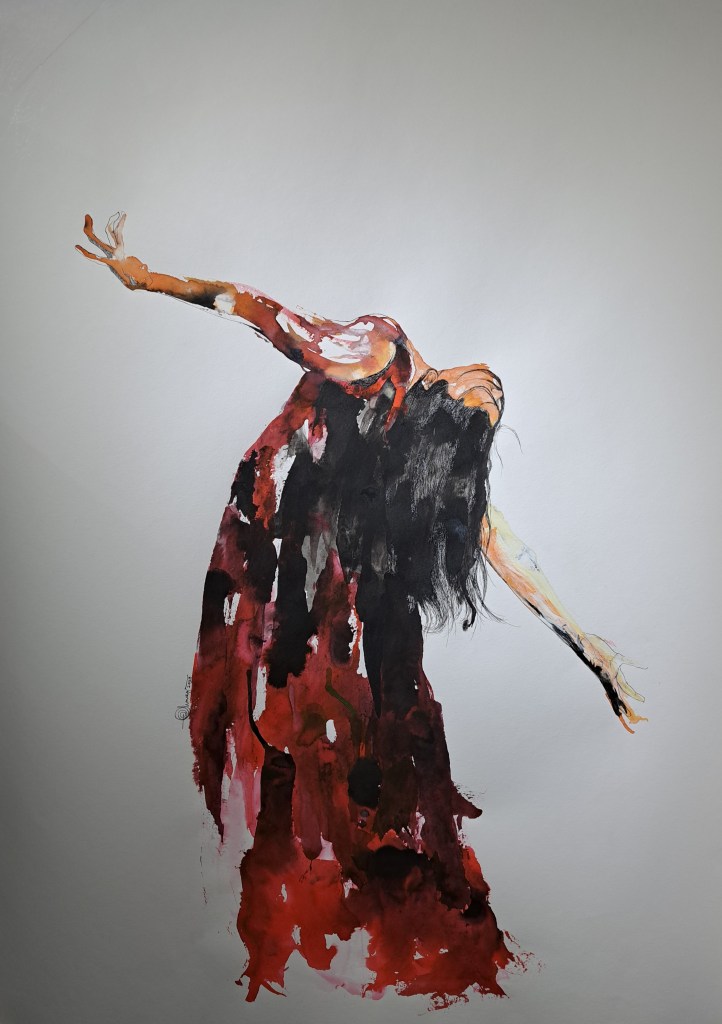
MOTION
Ink on paper 2023
48 x 36 in
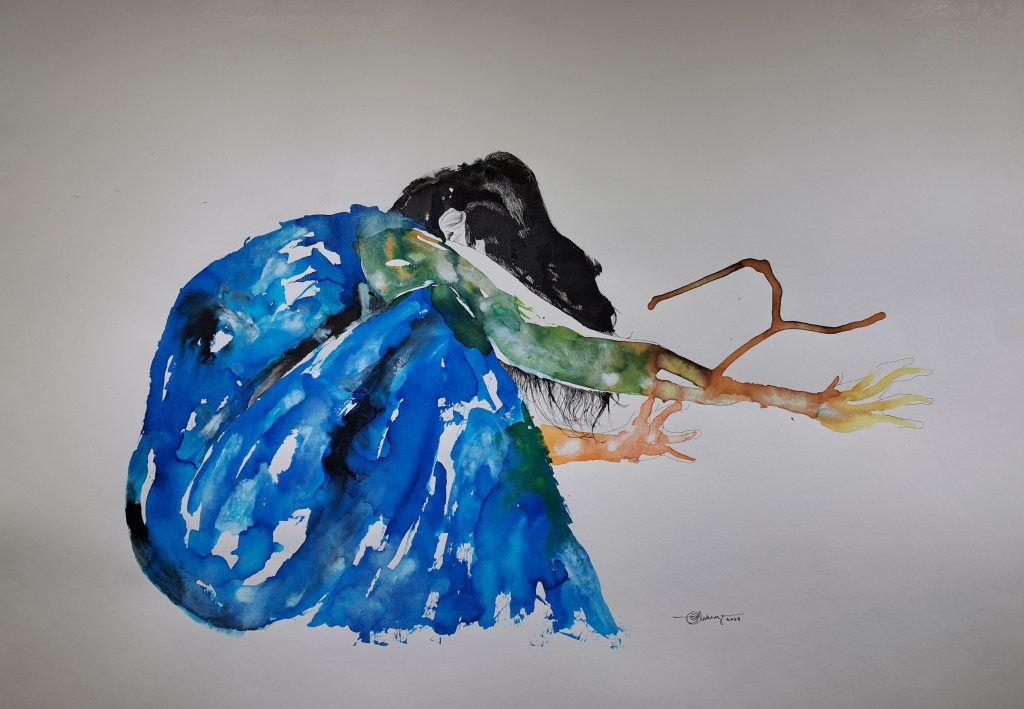
EXTENSION
Ink on paper 2023
36 x 48 in

REST
Ink on paper 2023
36 x 48 in
those that form on the surface explores a minute part of the 40,000-year culture. It focuses on the very brief period where a human being transforms into a babaylan (shaman). Literature states there are a number of ways where a babaylan-in-training transitions. One of the customs is the person acquires the babaylan sickness. They undergo a period of insanity where an abyan (spirit guide) tests their worthiness as a medium. The person who recovers from this illness then becomes a full-fledged babaylan capable of summoning a spirit guide that provides them with certain abilities like healing or predicting the future.
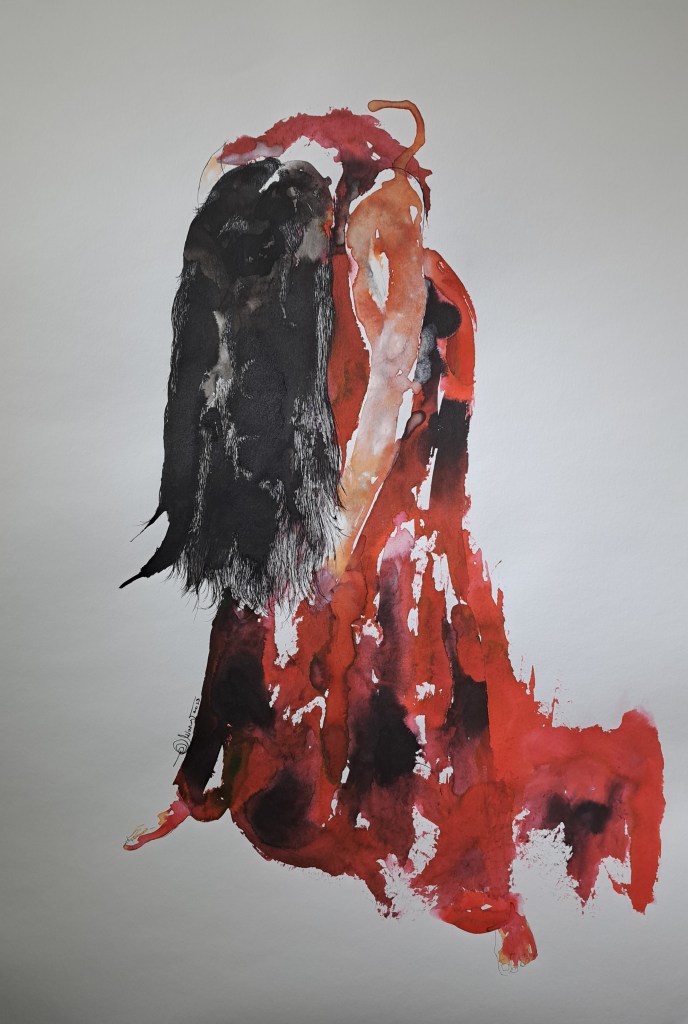
RESIGN
Ink on paper 2023
36 x 24 in
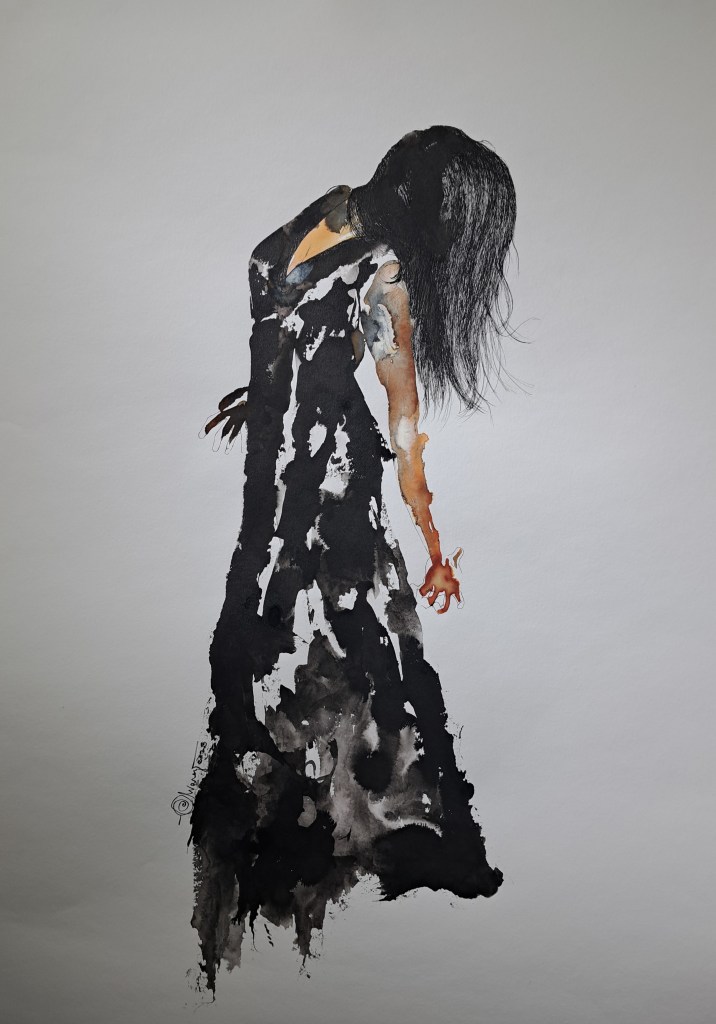
Untitled
Ink on paper 2023
36 x 24 in
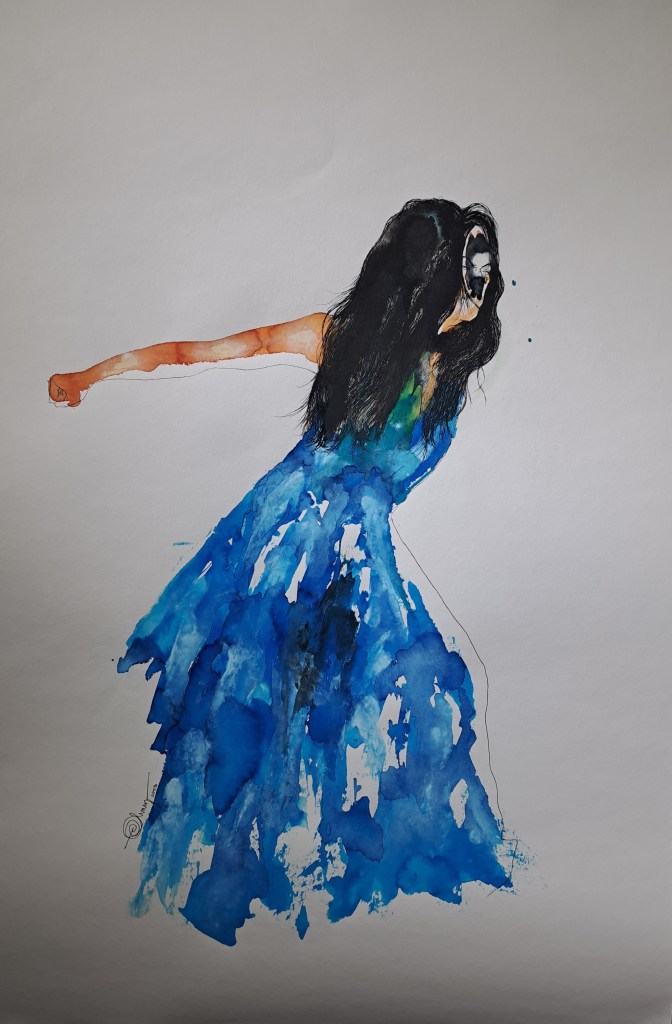
ANGER
Ink on paper 2023
36 x 24 in
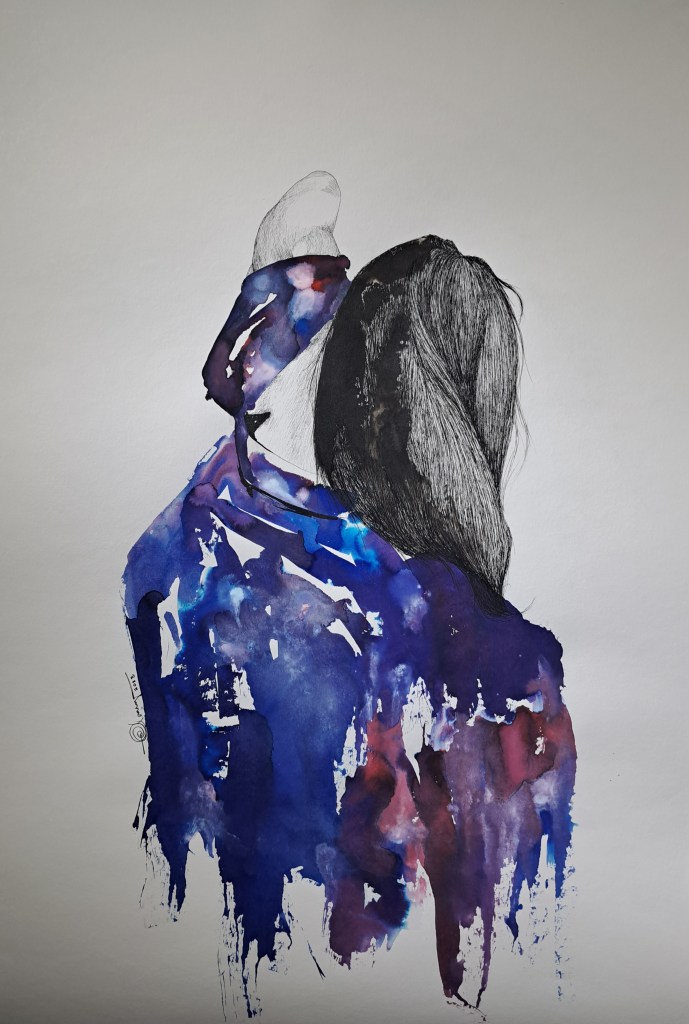
PEEK
Ink on paper 2023
36 x 24 in
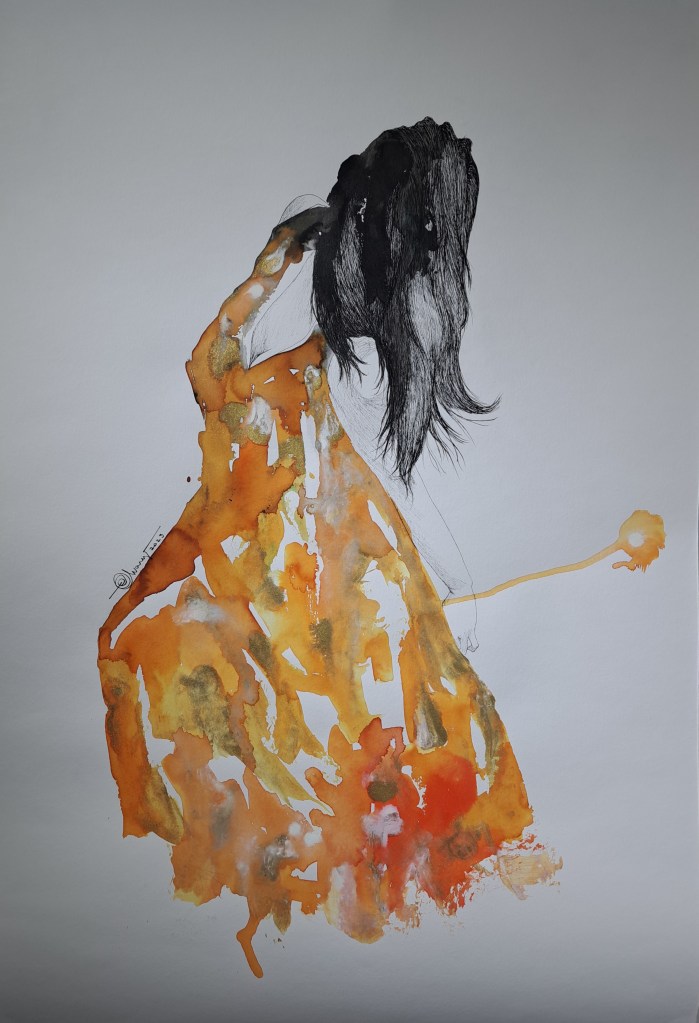
CHASE
Ink on paper 2023
36 x 24 in

GESTURE
Ink on paper 2023
36 x 24 in
those that form on the surface is about this brief period of insanity. It is an artistic display of movements, an interpretation of losing oneself as one journeys into the unfamiliar and succeeds in making their way back.
those that form on the surface is taken from an excerpt from Grace Nono’s interview with Undin Potenciano, a Manobo woman who is a full-fledged babaylan. In her interview, she said her grandmother, a powerful babaylan during her time, danced on the surface of water. This is poetic as water—the sea in particular—is often used in literary devices to mean death in Filipino culture. And the babaylan can dance on it.
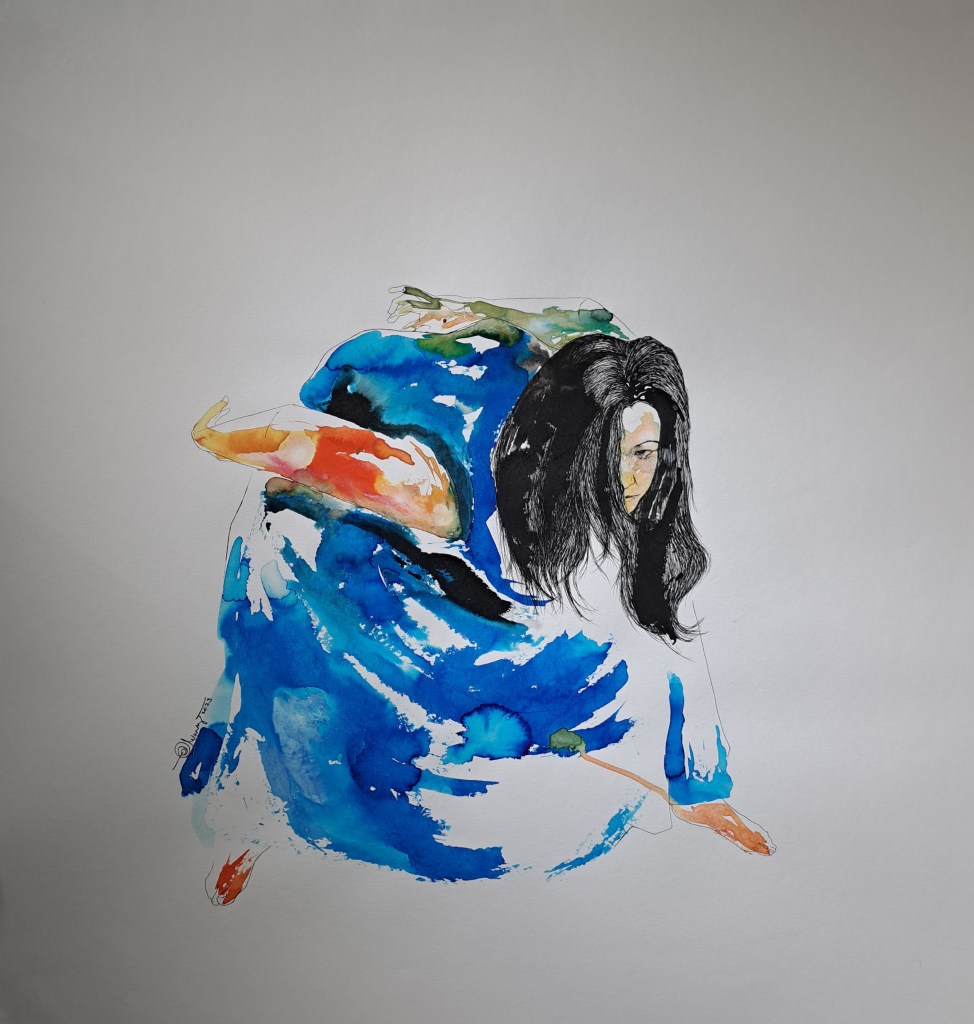
PATIENCE
Ink on paper 2023
36 x 36 in
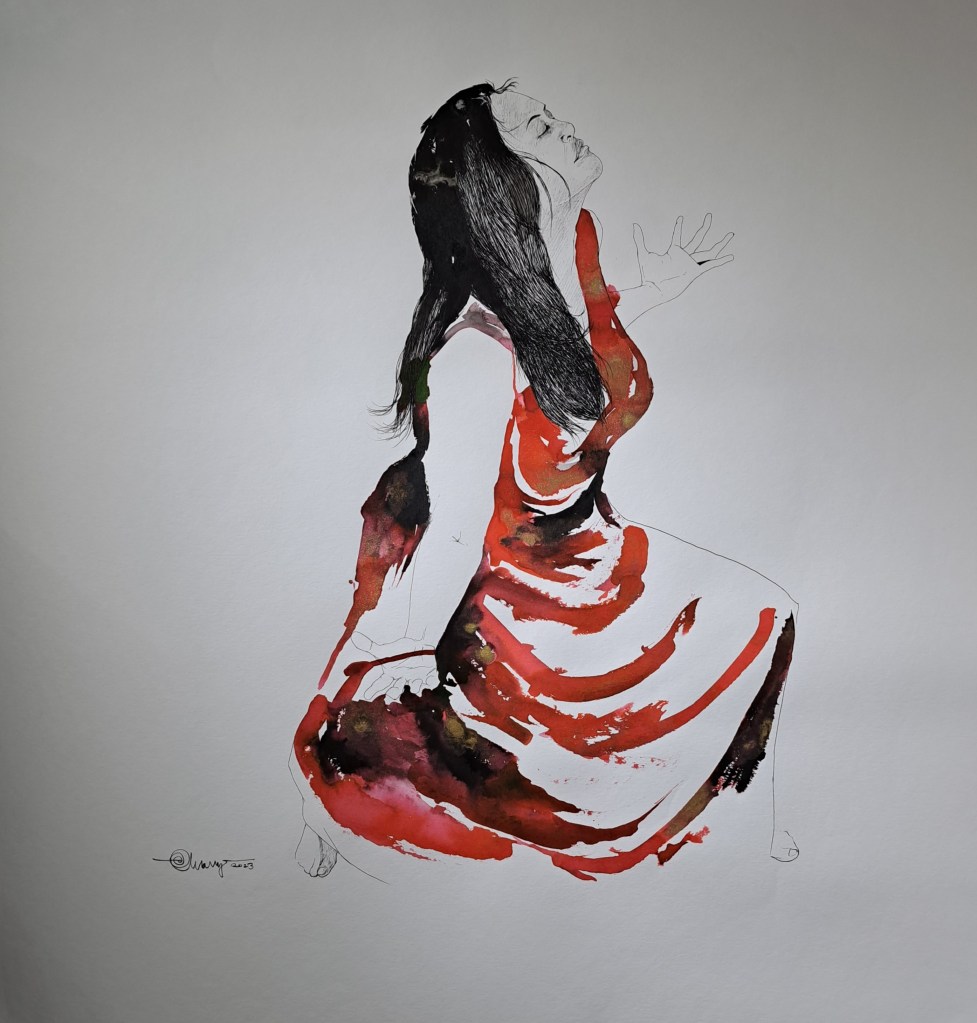
SIGNAL
Ink on paper 2023
36 x 36 in
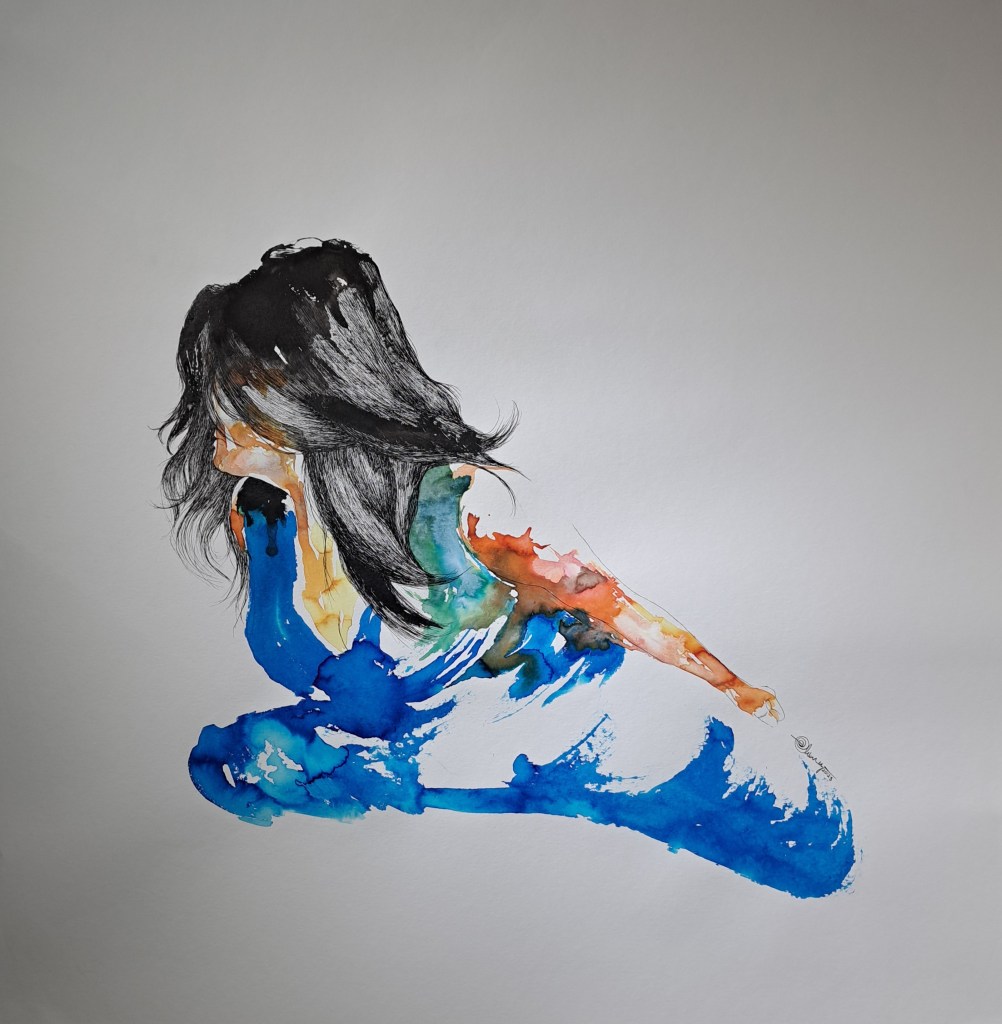
ACTION
Ink on paper 2023
36 x 36 in

COURSE
Ink on paper 2023
36 x 36 in
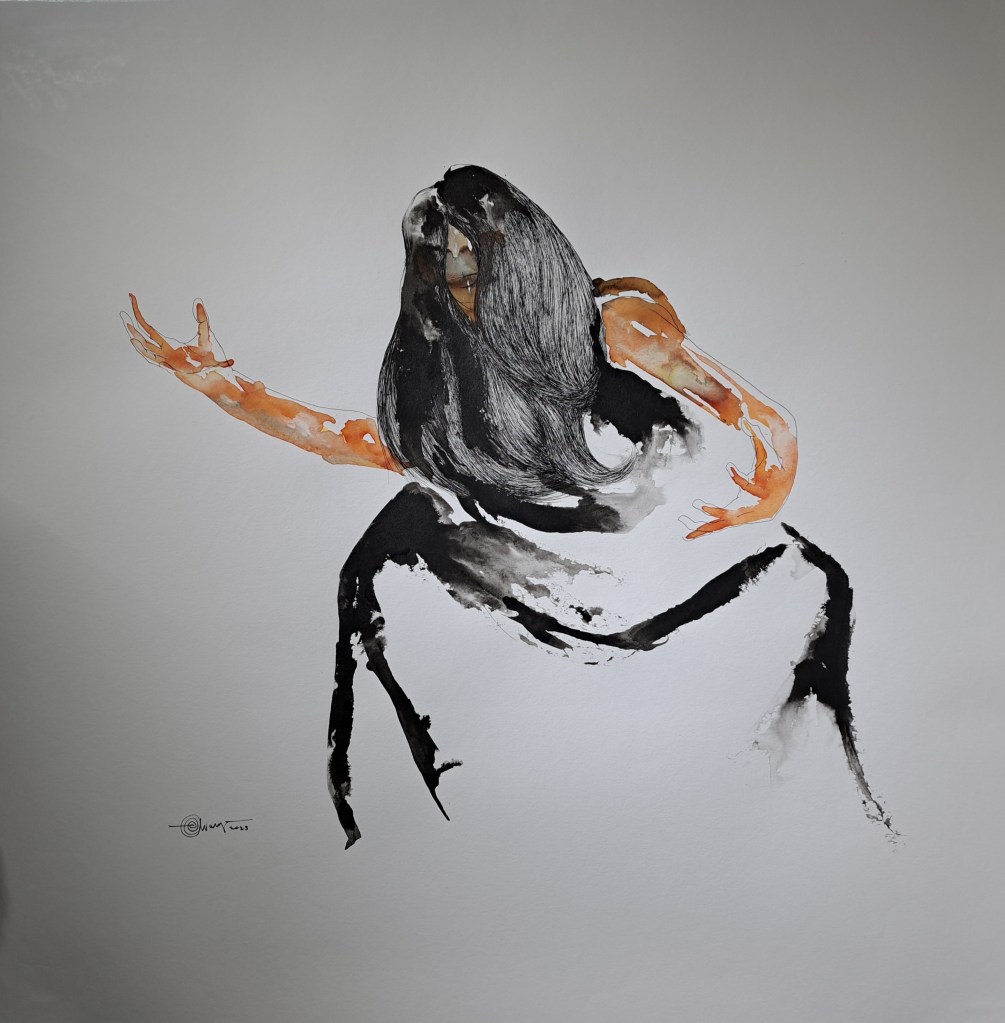
MOVEMENT
Ink on paper 2023
36 x 36 in
The image of dancing on water is also in contrast to Christianity’s Jesus Christ walking on water. This does not mean of course that the babaylan is better than Christ. This is just an example of relatability. As Filipinos, will we just walk on water if we were given this gift? No. We would dance and sing and somersault just like the babaylan because this is who we are as a people.
those that from on the surface is therefore an attempt to shed awareness on who we truly are. It is a call to explore the deeper aspects of our identity. It is an effort to look beyond our colonial years and truly discover ourselves unbounded by foreign biases.
those that from on the surface are us. We are the insanity. We are the figure that dances over water. We are the cure to our own illness.
Exhibit notes
by Ysa Sax
Photos from Altro Mondo Creative Space
As you explore “Those that Form on the Surface” by Pancho Alvarez, you are invited on a journey of rediscovery and reflection. Opening on January 20, 2024, this solo exhibition is a pivotal part of the artist’s ongoing advocacy to decolonize Filipino identity and heritage.
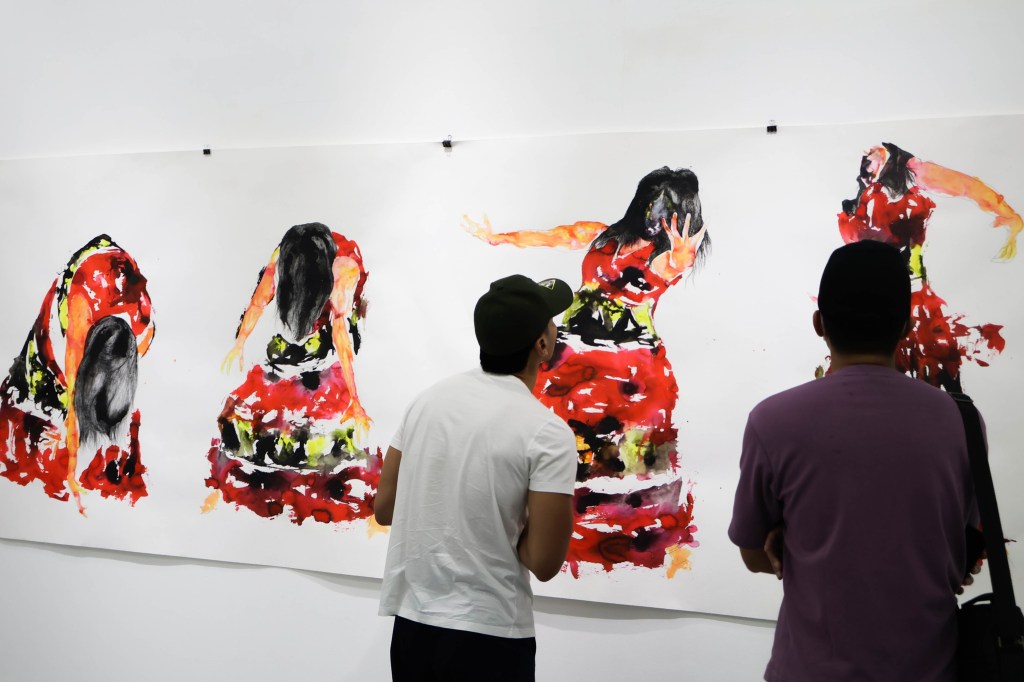
Encounter the world of babaylans, the shamans of Filipino culture. These individuals undergo a remarkable transformation, evolving from ordinary people to mediums capable of summoning an abyan (spirit). This transition isn’t just a personal metamorphosis; it’s a thread woven deeply into the fabric of the community, as babaylans serve as healers and spiritual guides. However, under Spanish colonial rule, these crucial figures were demonized, a tactic used to supplant indigenous culture with foreign beliefs.


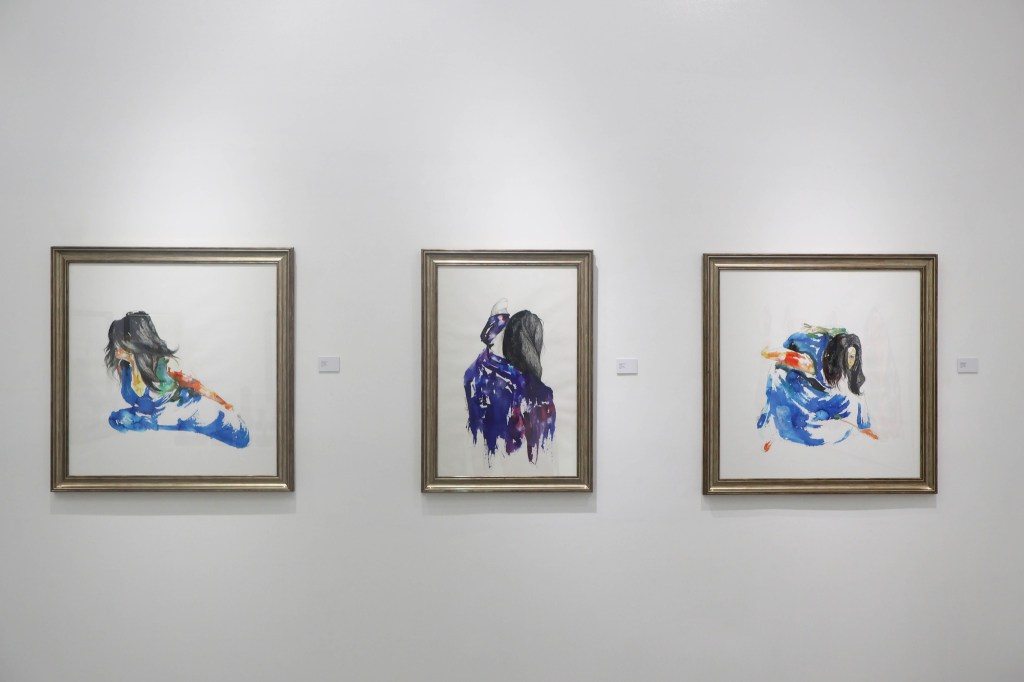

This collection, therefore, isn’t merely an artistic display; it’s a humble yet powerful invitation for you to revisit and reconnect with the Filipino precolonial heritage. It challenges you to look beyond nearly 400 years of colonial narratives that have shaped contemporary Filipino identity. Through his art, Alvarez offers a personal interpretation, rather than an academic analysis, aiming to fuel the ongoing conversation about who Filipinos are as a people. It speaks to the depth and richness of an identity that has withstood the test of time and adversity.

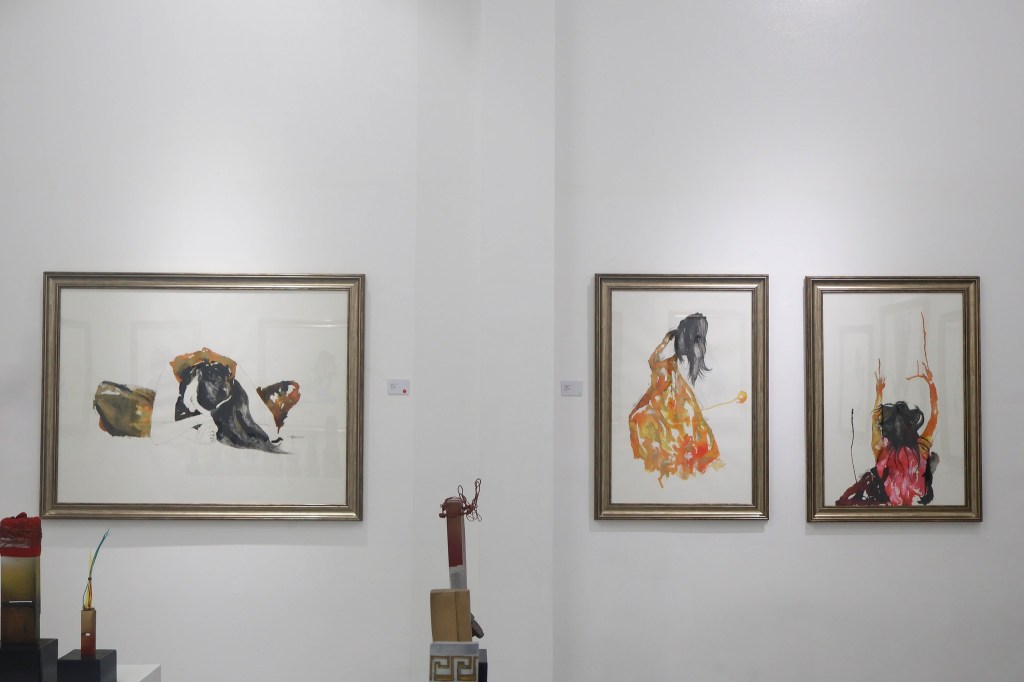


Experience beyond the surface of each piece of part, and engage with a 40,000-year culture, long overshadowed yet brimming with stories and wisdom. Alvarez’s work urges you to embark on a collective journey towards understanding and embracing the true essence of what it means to be Filipino, unearthing the layers of a heritage that extend far beyond the history handed down by colonizers.
Get in touch!
 The portfolio website of Panch Alvarez